Videos & Images



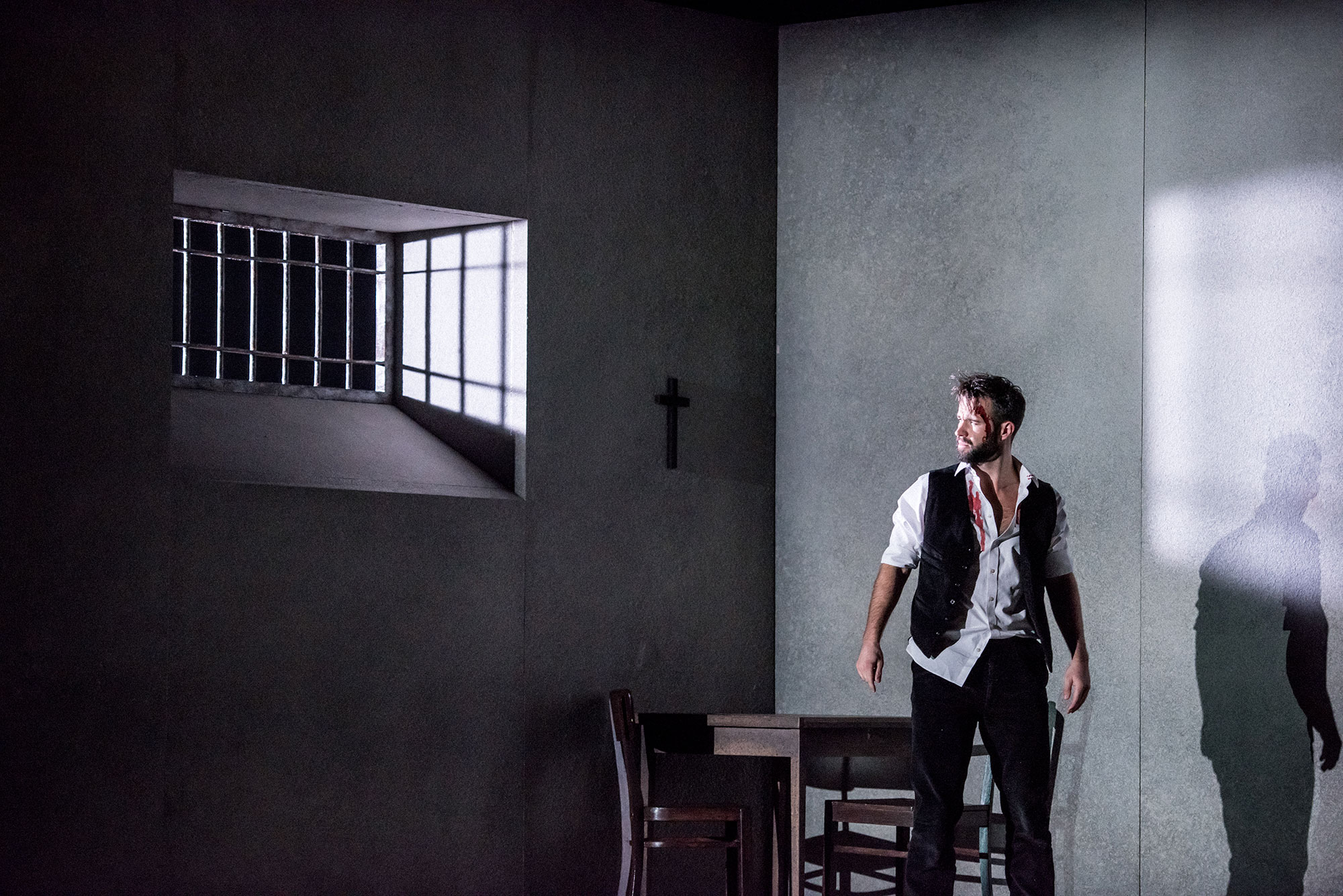
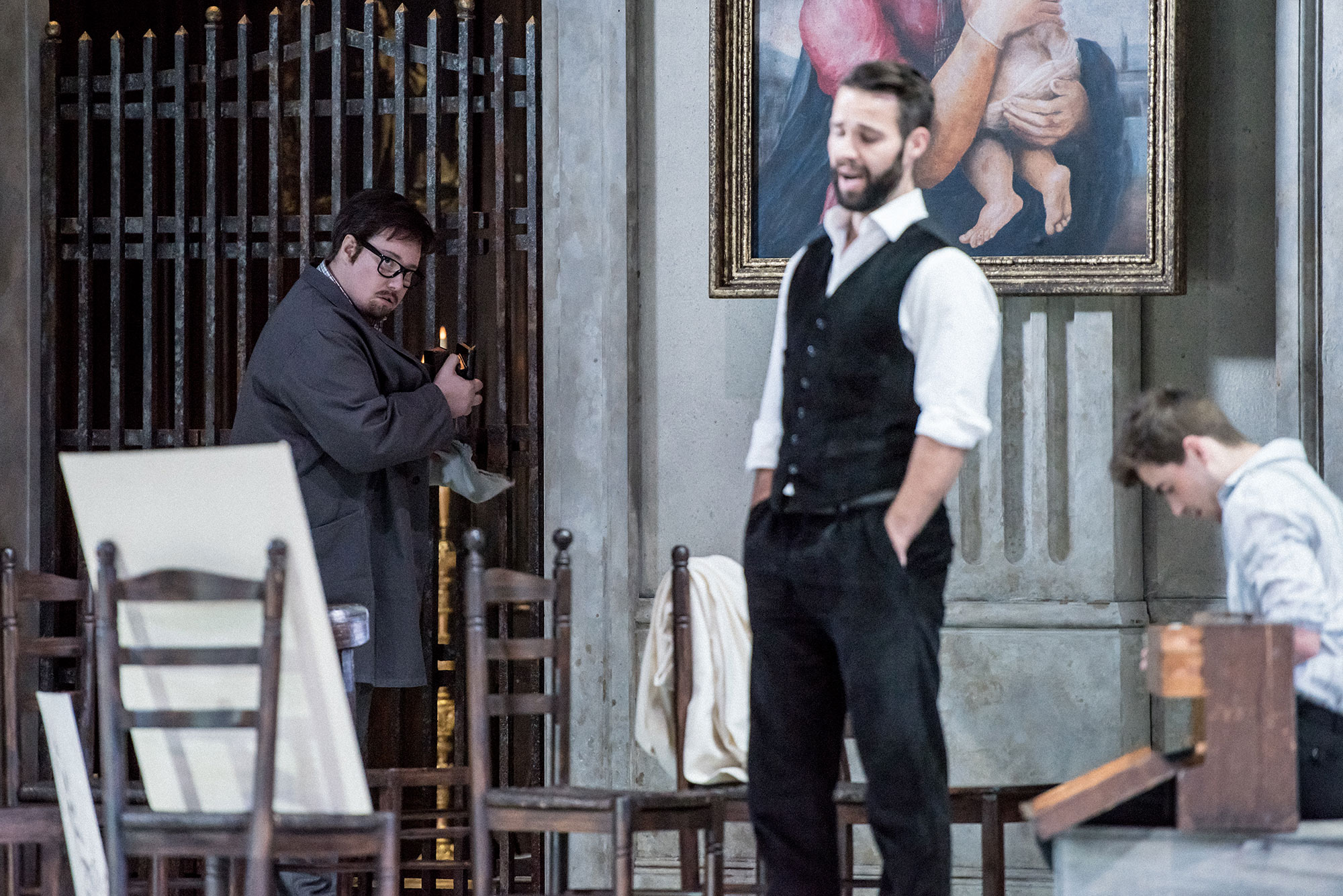
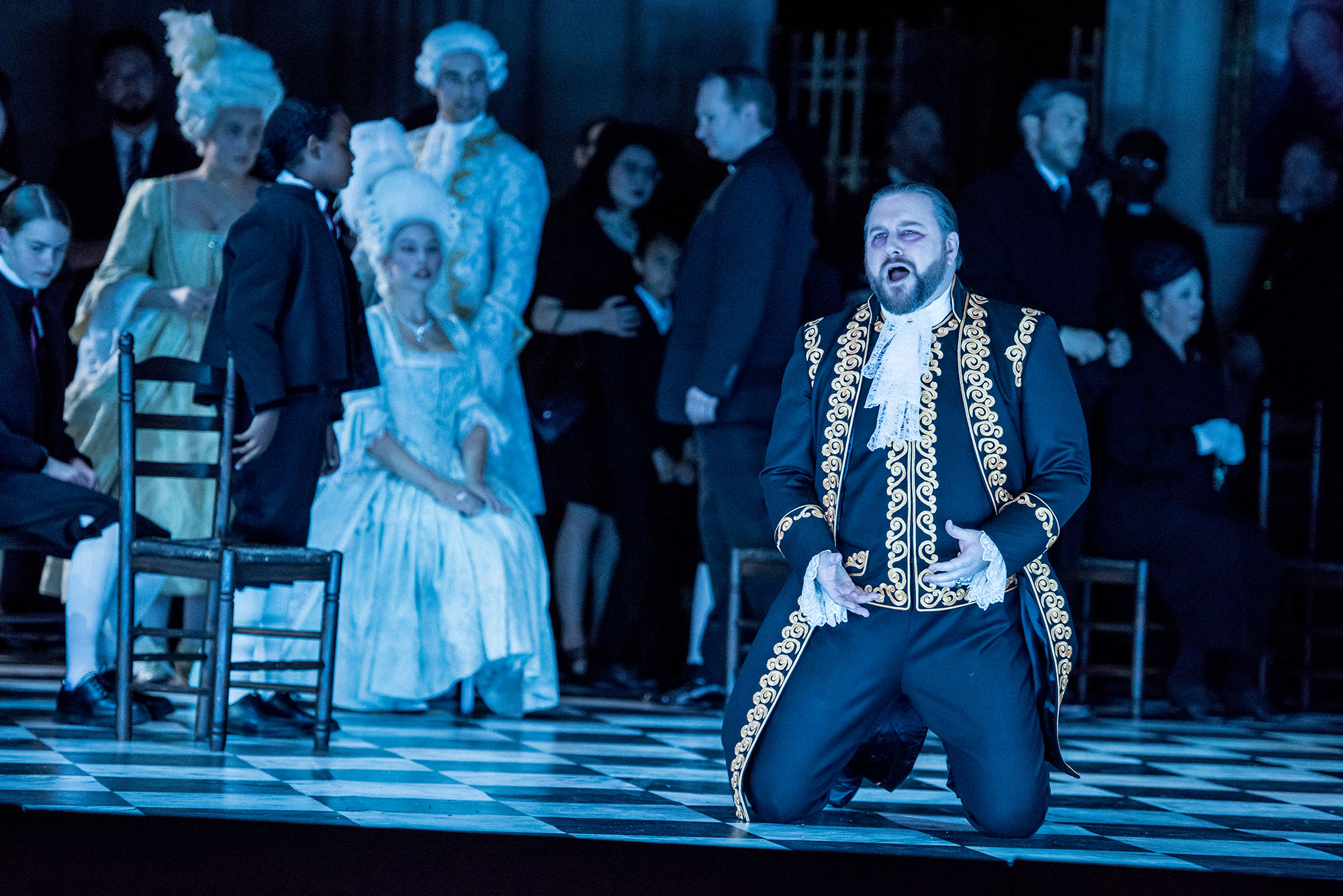
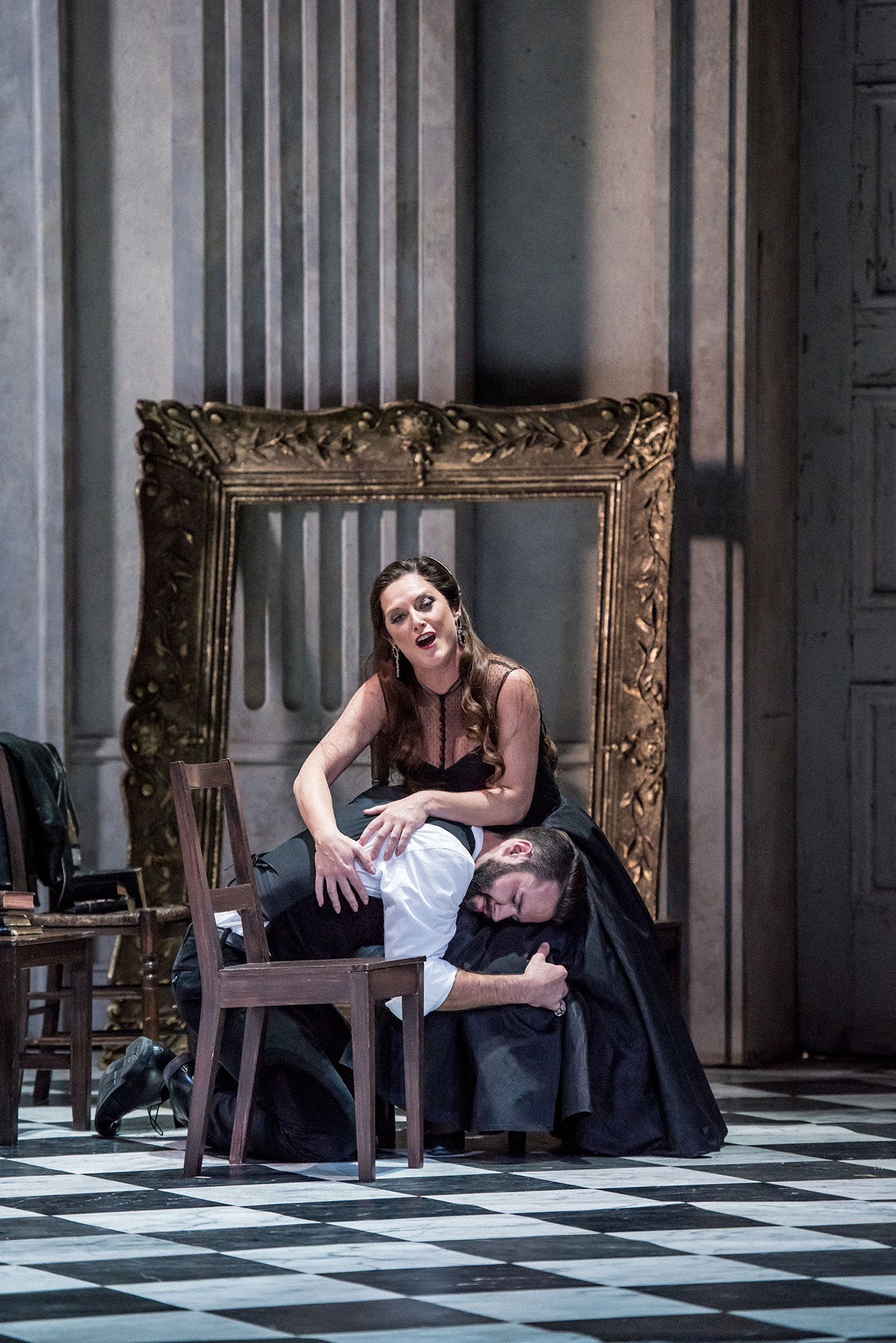
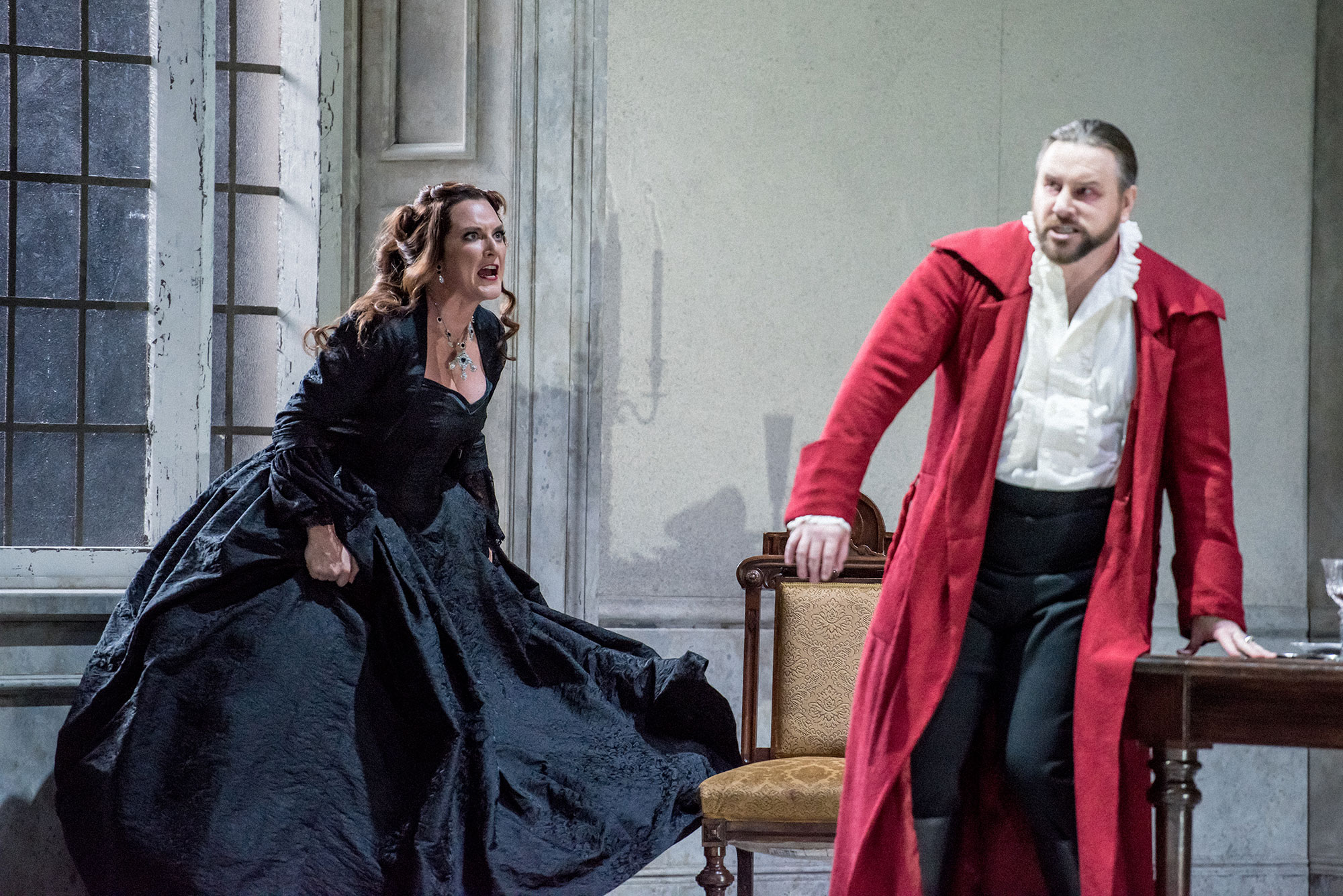
Don't miss Tosca with ENO
Book your Tosca tickets now and experience the drama of this unforgettable opera live on the iconic London Coliseum stage in 2026.

Tosca Synopsis
Turbulent times: foreign troops have attacked the national army at the border. Political unrest in the city is being ruthlessly quashed by the state.
Mario Cavaradossi, a painter, is a secret member of the resistance movement fighting to overthrow the oppressive state authorities. Scarpia, the city’s Chief of Police, is merciless in hunting down political opponents of the regime.
Cesare Angelotti, the leader of the resistance, has escaped from imprisonment and is on the run.
Cavaradossi is having an affair with the renowned opera singer Floria Tosca, meeting regularly at his country cottage. She knows nothing of his political activities, or of his friendship with Angelotti.
Act I
Angelotti, the leader of the resistance movement, has escaped from the state prison and comes to find the clothes hidden by his sister at a shrine where she often prays. Cavaradossi – a talented painter finishing a commission – is shocked to find the escaped prisoner. Angelotti begs for his help.
Cavaradossi realises that the mysterious woman who has been coming to the shrine to pray – and who has inspired the figure in his unfinished painting – is Angelotti’s sister, Attavanti.
Interrupted by the opera singer Floria Tosca, his secret lover, Cavaradossi conceals Angelotti and agrees to meet Tosca later that evening. Tosca is already suspicious that Cavaradossi is seeing another woman, and her suspicions are heightened when she recognises Attavanti as the subject of his unfinished portrait. Cavaradossi reassures her of his love and she leaves.
Cavaradossi owns an isolated country cottage where he and Tosca conduct their affair. He gives Angelotti the key and urges him to hide in a well there if he fears discovery.
The alarm has been raised, and the authorities are hunting the escaped prisoner. Cavaradossi does not want Angelotti to make the journey alone, and leaves to accompany him to the cottage.
Meanwhile, there is news from the front: the national army has defeated the foreign attackers in a decisive battle at the border, and the city prepares to celebrate the victory.
As Tosca has been ordered to perform at a state gala that evening, she returns to tell Cavaradossi that she must cancel their secret rendezvous. To her surprise, her lover has disappeared. Instead she meets Scarpia, the much feared Chief of Police, who is on the heels of the escaped Angelotti.
Evidence has been discovered that Cavaradossi is helping the fugitive and may himself be involved in the resistance. Scarpia realises from Tosca’s behaviour that if he finds the painter he will find Angelotti. He manipulates Tosca into believing that her suspicions about Cavaradossi and Attavanti having an affair are correct.
A furious Tosca leaves to confront Cavaradossi, suspecting he will be at the country cottage where they have shared their most intimate moments. Scarpia orders his men to follow her.
Scarpia is ecstatic at the prospect of having his enemies – and Tosca – in his power.
Act II
Scarpia waits for his men to return. He takes pleasure in using his power to force women who resist his advances to submit to him unwillingly.
Spoletta, his aide, returns. He has followed Tosca to the country cottage, but has found only Cavaradossi, who has been arrested and brought into custody for questioning. The painter protests his innocence to Scarpia.
Tosca and the choir finish their gala performance. She has been ordered to report to Scarpia. To her horror, she discovers that Cavaradossi is about to be tortured in an attempt to force him to reveal Angelotti’s hiding place at the cottage.
Despite Cavaradossi’s desperate demand that she say nothing, Tosca cannot bear to hear his suffering, and gives up the secret: Angelotti is hiding in the well. Spoletta leaves to arrest him.
Scarpia stops the torture but takes pleasure in making Cavaradossi understand that Tosca has betrayed his wishes. Cavaradossi curses her.
Sciarrone, another of Scarpia’s men, arrives with devastating news: despite the earlier reports and the celebrations in the city, the national army has been routed by the enemy at the border.
Brutalised by torture but triumphant at the news of the defeat of the state forces, Cavaradossi denounces Scarpia as the tyrant and murderer he is. Scarpia condemns him to death.
Left alone with Scarpia, Tosca attempts to save Cavaradossi. A wealthy woman, she offers him money, but is horrified when Scarpia tells her that only her body will be accepted as the price of her lover’s freedom.
With no other choice, Tosca agrees, but insists on having a guarantee that Cavaradossi will be saved.
Spoletta returns to reveal that Angelotti has taken his own life rather than be captured. In front of Tosca, Scarpia orders him to stage a fake execution of Cavaradossi the following morning, referring very pointedly to a similar situation in the past. Tosca insists on Scarpia writing a letter of safe conduct for herself and the painter, allowing them to escape the city.
With future escape apparently secured, Tosca is left alone with Scarpia. As he touches her, she takes a knife and kills him, escaping the scene.
Interval
Act III
Cavaradossi awaits his execution and asks to be allowed to write a letter to Tosca. He remembers the beauty of their past times together.
Suddenly, Tosca appears. She tells Cavaradossi that she has killed Scarpia, his body is undiscovered, and that their escape to freedom is within reach. His execution will be a sham: once it is over, they will flee the city together.
But even in death Scarpia has triumphed. His promise to Tosca was a fraud, and the execution is only too real.
Devastated at the murder of her lover, and with Scarpia’s men now hunting her after the discovery of his corpse, she vows revenge.
Introduction Guide
Read our guide to Puccini’s Tosca, a tragic story of passion and jealousy, including discussion of the story and the composer.
Tosca FAQs
Tosca is one of Puccini’s most famous operas, first performed in 1900. Known for its intense drama, emotional realism and powerful music, it tells a gripping story of love, power, jealousy and sacrifice, set against the backdrop of 19th-century Rome. The score moves from sweeping romance to moments of suspense and shocking intensity, making it one of opera’s most gripping works.
Floria Tosca is the title character of Puccini’s opera, Tosca. One of opera’s most compelling heroines, she is passionate, devout, fiercely loyal and emotionally complex. Through her character, the opera explores personal conviction, artistic expression and the courage to resist corruption and oppression.
Tosca’s lover is Mario Cavaradossi, a painter with strong political views. His relationship with Tosca brings warmth and intimacy to the opera, while his willingness to challenge authority helps drive the tension and danger at the story’s centre.
Tosca was written by Italian composer Giacomo Puccini, with a libretto by Luigi Illica and Giuseppe Giacosa. Puccini composed the dramatic score of this world-famous opera, including some of its most recognisable arias.
Unfolding over 48 hours in June 1800, Rome, the story of Tosca follows artist Cavaradossi and his lover, celebrated opera singer Tosca, as they become entangled with escaped political dissident Angelotti. When the villainous Baron Scarpia, Rome’s chief of police, discovers their connection, he manipulates Tosca in a dangerous game of cat and mouse. Exploiting her passion for Cavaradossi, Scarpia pressures her into an impossible choice between love and survival. As political intrigue and personal desire collide, the drama escalates to devastating consequences. Who will survive? Will Tosca get her man? Will Scarpia recapture his prey?
Tosca is based on the 1887 French play “La Tosca” by Victorien Sardou, which was inspired by real historical events and characters from 19th-century Rome. While not a direct retelling of actual events, it draws on the political atmosphere of the Napoleonic era and incorporates authentic historical settings and conflicts.
Tosca is the surname of the opera’s title character, Floria Tosca, so it doesn’t have a direct translation into English. In terms of the story’s meaning, Tosca explores how love, art and personal conviction can become forms of resistance against corruption, violence and oppression.
One of the most famous songs in Tosca is “Vissi d’arte”, Tosca’s powerful aria in Act II. In it, she reflects on her life, faith and devotion to art while facing an impossible situation. It begins with the phrase “Vissi d’arte, vissi d’amore”, which translates as “I have lived for art, I have lived for love”.
Another well-known aria is “E lucevan le stelle”, sung by Cavaradossi in Act III.
Related Content
Tosca: A Timeline

The Beginner’s Guide to Puccini